Showing posts with label Free Market. Show all posts

Friday, July 24, 2015

Understanding Internet-based economy

published @TheJakartaPost

We are entering a new economy that will change the way we work, buy things and utilize our assets. Put it in a thumbnail sketch, the new economy will be: the return of on-demand/gig economy and the rise of sharing economy.

Long ago people did business directly through bartering. Later, the barter system was replaced by money. Due to increasing demand and consumers in the market, production became more complicated. A producer had to recruit more workers and orchestrate production in a more systematic way.

The Internet era has ushered in the new economy, digitally connecting people worldwide. The information barrier between producers and consumers has disappeared. Now it is easy for producers to connect directly with consumers through a single click.

Replacing the travel agent, airline tickets can be easily booked online. The Internet enables us to buy and compare ticket prices easily. As a result, conventional travel agents have lost their relevance in the new economy.

Mushrooming online stores offer a far wider range of products than agents or brick-and-wall stores. This advantage is not only enjoyed by consumers but by producers as well. Renting a shop to sell things is not necessary anymore, because everything, ranging from offering, selecting, paying, can be undertaken online, causing conventional shops to lose their relevancy in the new economy as well.

Working environments have also changed. In the job market, outsourcing is easily undertaken. Part-time jobs have become the new normal; people change jobs all the time. More people work on a specific project rather than working permanently for a firm.

The firms are still around, but redefined. Firms will have two functions: pure producer of goods and services and platform provider for a meeting point between producers and consumers.

We are inadvertently reverting to the on-demand/gig economy of the past, but now on a global scale.

Another feature of the new economy is the rise of sharing economy. The longstanding under-utilized assets such as cars, spare rooms, etc. are easily exposed and shared with others who need them. Again, all communication and transactions are undertaken via the Internet. These dormant assets are now being managed professionally and become new threats to conventional businesses such as taxi operators and hotels.

The Internet-based economy poses challenges to consumers, government and conventional firms.


* * * * *

Wednesday, February 11, 2015

Foster Kiat Esemka, not Proton

published @ The Jakarta Post

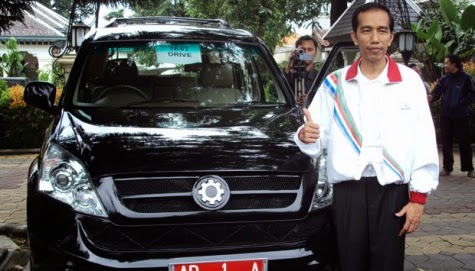
President Joko “Jokowi” Widodo has been yearning for a national car since he served as mayor of Surakarta, more commonly known as Solo. Back then, he promoted Solo’s vocational-student made car, the Kiat Esemka. This idea made headlines again during his recent visit to Malaysia. In a bid to develop its own national car, an obscure Indonesian car company led by the President’s party clique will cooperate with the Malaysian government-backed Proton.

Proton is the brainchild of Malaysia’s most revered leader, Mahathir Mohamad. Unlike Indonesia, which has let foreign-brand cars rule the roost in the domestic market without any concession, Malaysia applied a different strategy. Since his early years in power, Mahathir has been determined that Malaysians would master automobile technology and produce their own national brand.

Purportedly, in exchange for participation in a liquefied natural gas (LNG) project in Sarawak, Japan’s Mitsubishi had to transfer its automobile technology to support Malaysia’s car brand, Proton. So, in 1985 the first Malaysian national car, the Proton Saga, was launched bearing a strong resemblance to the Mitsubishi Lancer. Even if this was, in fact, a Japanese-made car, Malaysians dominated the management team and Malaysia has its own brand to be proud of.

The most stirring lessons learned from Proton is that the Malaysian government’s role was key to growing the automobile company. And rather than reinventing the wheel or getting technology transferred, Proton obtained its technology from Mitsubishi and Lotus through shrewd negotiation of exchanging natural resources with high technology and acquisition.

This brings us back to the plan of reviving Indonesia’s national car.

In my opinion, Indonesia should emulate Malaysia’s strategy. But it is of no value that this must be done through cooperating with Proton. Inviting Proton is the same as inviting Toyota, Honda, Suzuki etc.

Proton will be another foreign-brand car benefitting from Indonesia’s market, but this time it will be backed by Indonesia’s government.

It’s also detrimental to the hoped-for national brand.

Better yet, Indonesia could build its national car on its own. Bear in mind that in 1993 the son of then president Soeharto established a national car company, Timor. Back then, Timor was exactly the Indonesian version of Proton. Timor had nothing but the management team and the brand. The car was equipped with machinery from South Korea’s Kia. Later, the company vanished following the fall of Soeharto.

Once there is hype surrounding the Kiat Esemka, contributed to by President Jokowi, the government must back, inject funds and grow this domestically made car. Once a national car has been produced, the Indonesian government must support it by giving it a leg up in both the domestic and export markets and ensure its survival.

Delving into history, this strategy has been applied stretching back to the founding of Toyota in 1933. In 1939, Japan kicked out America’s General Motors and Ford from Japan’s market to foster domestic car manufacturers. But Toyota still faced heady years. In 1949, the struggling Toyota was bailed out by the Bank of Japan. And the rest is history.

Finally, hats off to Malaysia’s strategy in raising Proton, however, developing an Indonesian national car with Proton has neither rhyme nor reason.

* * * * *

Thursday, January 15, 2015

Should Air Ticket Prices Be Regulated?


published @ The Jakarta Post

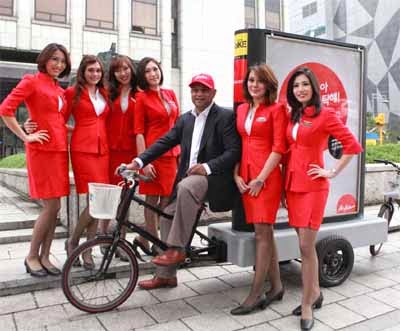
Low cost carriers (LCC) are an innovation of value in serving airline customers. Some customers value convenience, but others value low prices, especially for short-distance flights. This market niche has been well-filled by some airlines. To cut the price, a no-frills service is given.

Following the crash involving prominent LLC AirAsia, the Transportation Ministry is to set a minimum fare for air travel tickets. This policy will require that companies charge no less than 40 percent of the price ceiling. The basis for this policy is the argument that LCC neglect safety, jeopardizing passengers. But is it true?

Data reveal that the link between ticket price and flight safety is extremely tenuous. LCC know very well how to manage low margins in this highly regulated business. Ridiculously, a director at the ministry wondered how LCC could sell tickets for only Rp 10,000 (79 US cents) for the Jakarta-Medan route (The Jakarta Post, Jan. 8, 2014). To him that’s impossible.

He forgot that low prices are simply a marketing strategy. LCC do not sell all their seats at such low prices, and, of course, not all the time.

Such an impossibly low price is intended to prompt hype in order to spread the LCC brand. As a result, the load factor (the number of passengers compared with seats available) will be high, and the airline still has a good margin because of its economies of scale.

LCC are created by entrepreneurs pursuing profit; don’t teach the fish how to swim.

This would-be regulated minimum price will also aggrieve consumers. For the last decade, people have enjoyed travelling throughout the archipelago by plane because of these cheap prices.

Another concern is that the regulator will have no idea or control whether the funds from the increased price will be allocated for safety measures or simply for profit.

Worse, if the minimum price has been set and in the future – hopefully never — a plane crash occurs, then this policy will have been pointless and disadvantageous to all stakeholders.

But without regulating minimum prices, how do we address safety issues?

The responsibility lies with the Transportation Ministry. Instead of setting a minimum price, it’s better to issue strict regulations for flight safety. Plane maintenance, weather data provision, operation audit etc: the regulations must be put in place. LCC must comply with regulations. As long as all safety regulations are fulfilled by airlines, then the safety of the plane must be left to The Almighty.

The policy of minimum price definitely barks up the wrong tree. The focus should be on strict regulation, certificates of safety and good supervision. After that, let the airliners compete, and let the customers decide and enjoy the low prices.

* * * * *

Monday, February 24, 2014

Nationalist in Free Market Era


published @ The Jakarta Post

Indonesian Democratic Party of Struggle (PDI-P) politicians have befuddled us many times. They seem to emphasize nationalism, the need for a people’s economy, but sometimes their policies contradict the ideologies they tout.

During Megawati Soekarnoputri’s 2001-2004 stint, she made many blunders in regard to nationalism. First, she divested the government’s majority share at Indosat, a state-owned company, to foreign firm Singapore Technologies Telemedia (STT). The government not only sold a lucrative company but put national security at risk.

Second, she sold Tangguh natural gas at a cheap price to China via a long-term contract. She fiddled away a big source of big government funding to satisfy national ambition. Third, she sold the Pertamina-made very large crude carriers (VLCC). The vessel was codesigned by Indonesians and it would have given Pertamina an advantage. Recently, Jakarta Governor Joko “Jokowi” Widodo made the same mistake by buying Chinese-made articulated buses instead of those domestically made by PT Inka for the Transjakarta fleet. Those Chinese-made buses were found to be rusty and damaged. Procedurally speaking, what Jokowi’s administration has done is not wrong.

The provision of buses was undertaken through a competitive international tender. The products that fulfill the right specifications and offer them at the cheapest price should be awarded the tender. Unfortunately, Inka’s articulated buses lost to China’s. Inka, however, still provides Transjakarta single buses. Inka also previously lost to a Chinese company in Soekarno-Hatta International Airport’s commuter line tender.

The tender is under investigation but Chinese products are a threat to almost all national products. Jokowi, who is tipped to be Indonesia’s next president, must pay attention to this. National products have to be championed. And the lessons learned from China’s auto industry, which dominates the global auto industry, in relatively short terms must be drawn.

In fact, the Chinese government intervene in the industry through state-owned automakers. It strengthens its domestic automakers; it regulates the transfer of technology from foreign automakers through joint venture; and, ultimately, it develops a Chinese brand.

In contrast, Indonesian leaders abandoned the potential of its state-owned automaker. In 1965, Sukarno uttered the vision of berdikari (stand on our own feet — self reliance). Former president Soeharto forged this policy through establishing strategic industries. Inka is a state-owned company specializing in rolling stock and automotive manufacturing. If we can produce things on our own, why are buying from China?

Indonesian leaders, including Jokowi, seem naive when it comes to free-market implementation. Historically, almost all nations, including the UK, US and Japan, protected their own industries in the early years of industrialization.

Finally, in contrast with the stale economics textbook, the state can regulate the market for its own interests. As market law goes: “market is great as long as you win.”

* * * * *

Friday, September 27, 2013

Produce Our Own National LCGC


President Susilo Bambang Yudhoyono signed the government regulation on low-cost green cars (LCGC). The policy aims to reduce carbon emissions by decreasing fossil fuel consumption. This low cost emanates from the elimination of luxury-goods sales tax. And the types of green cars are electrical cars, hybrids, biofuel-based cars and compressed natural gas (CNG) cars. Can this policy expect any results? The answer is absolutely no. This policy is not only unable to reduce carbon emission, but will discourage our national automotive industry as well.

Monday, January 9, 2012

Kiat Esemka: Hoped-for National Car?

Published 10/1/2012 @ Jakarta Post http://www.thejakartapost.com/news/2012/01/10/letter-kiat-esemka-hoped-national-car.html

Solo Mayor, Joko Widodo makes headlines again. With splashy action, he replaced his official vehicle, Toyota Camry with vocational student-made, Kiat Esemka. It suddenly rekindles the long awaited national car. And it draws both supports and criticisms.

Truth be told, Kiat Esemka has neither been long tested yet nor prepared for mass production. Solo Mayor, who in fact has good intention, is too fast to make it his official car.

Many also question who really design and build the engine as the important part of the car. Does it the solely wolishe rk of vocational students? Or does it imitate other manufacturer? Or do they buy it from other countries such as China?