
published @ The Jakarta Post
This is to respond to The Jakarta Post’s editorial entitled “Unbreakable dynasties” on July 10. I completely agree with the Constitutional Court verdict scrapping the discriminatory clause in Law No. 8/2015 on regional elections.
Previously, the law included unfairly banning relatives of the incumbent to run in regional head elections. In a democracy, as long as no law is being broken, people’s choice should be the only filter in the election.
A political dynasty is not necessarily a bad thing. In America — the pioneer of modern democracy — political dynasties are well-accepted. No one is complaining about the Kennedy family, Bush family, or Clinton family for dominating American politics.
They ascend to power simply because of their capability of public service. The dynasty grooms them well and politics is ingrained in daily life. Nothing is wrong with this. Unfortunately, instead of quality, the Indonesia’s political dynasties depend only on popularity.
The essence of democracy is crowd wisdom. The idea is that all eligible voters decide and the outcome naturally fits with the people’s interest. And the precondition for a functional democracy is the quality of voters. They must be aware of how a democratic system works.
They must know the wrong decision means disaster to their opulence. Dating back to early democracy, only the rich, professional and the likes whose interest need protection could vote. They were very rational and only voted for the candidates who would really take care of them. Gradually, more people became eligible and finally universal suffrage was applied.
Democracy was not invented here. Indonesia is not well prepared to embrace democracy. Since the beginning, Indonesia has implemented universal suffrage — no filter for irrational voters. Both rational and irrational voters will choose a leader. Unsurprisingly, the outcome sometimes is illogical.
The member of a political dynasty who achieved nothing in the past, even without experience, can easily assume office. Democracy goes haywire.
Accordingly, the key is the rational voters. People must have awareness of the consequences of their choices. Good education emphasizing logic might work for this goals. Since we can reverse the flow of democracy, to be fair, political dynasties must be accepted. To curb the much-concerned corruption, law must rigorously and indiscriminately be enforced. To avoid the low quality of popular candidates, the people must be filled with information.
In my opinion, in the long term this will work.
The problem of Indonesia’s political dynasties lies in the existence of rational voters rather than the political dynasty itself. Had the people become rational, the regional heads would have been democratically selected based on meritocracy. The best must lead the rest.
* * * * *
published @ The Jakarta Post
Tragedy is surrounding Greece. Since the economic crisis in the eurozone in 2008, Greece has never recovered. The economy is shrinking and unemployment soaring. To fix the economy, Greece borrows money from the International Monetary Fund (IMF). As usual, the IMF’s recipe for handling economic crisis is focused on austerity.
In contrast with Keynesian economics — where governments spend to move an economy in recession — austerity measures involve government budgets tightening up and letting the economy grow by itself. This recipe is frequently wrong, and it has turned out to be wrong in Greece. The Greeks has suffered for years with austerity measures that don’t work. It is unsurprising that in the referendum recently held over approval of more austerity measures, the Greek people rejected them. Why does tragedy continue to happen in Greece? There are two reasons: the eurozone and the Greek welfare state.
The European Union was established to avoid wars among European nations. After two devastating world wars, the Europeans wanted unity of all countries, politically and economically, to strengthen peace in Europe. Of the EU’s members, some have adopted a single currency, the euro, which was introduced in 1999. The group of countries using the euro is called the eurozone.
Many, including EU members, had doubts about the idea of a single European currency. That’s why England has not adopted the euro. A single currency means a single interest rate for all countries involved. It is a flawed theory. Every country has a different economic performance and different economic problems. Germany is very competitive.
It failed in theory, and now it has failed in practice.
Make no mistakes, the other problem lies in Greece itself. Welfare-state policies introduced by the much revered Andreas Papandreou, a socialist, are to blame. He served two terms in office – 1981 to 1989 and 1993 to 1996.
His legacy has unintentionally contributed to Greece’s bankruptcy. For instance, the Greek pension system is “better” than that of Germany. In Germany, 40 years of service allows a civil servant to get a pension equivalent to 70 percent of their final basic salary. In Greece, however, after only 35 years, if you are 58 or older, you receive 80 percent of your previous salary.
The Greek tragedy of economic disaster is currently being written.
* * * * *
published @ The Jakarta Post
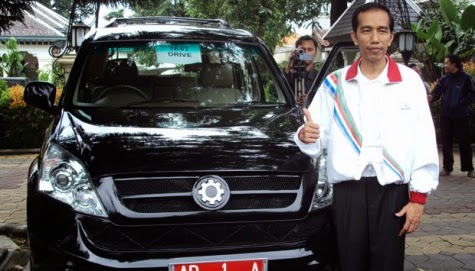
President Joko “Jokowi” Widodo has been yearning for a national car since he served as mayor of Surakarta, more commonly known as Solo. Back then, he promoted Solo’s vocational-student made car, the Kiat Esemka. This idea made headlines again during his recent visit to Malaysia. In a bid to develop its own national car, an obscure Indonesian car company led by the President’s party clique will cooperate with the Malaysian government-backed Proton.
Proton is the brainchild of Malaysia’s most revered leader, Mahathir Mohamad. Unlike Indonesia, which has let foreign-brand cars rule the roost in the domestic market without any concession, Malaysia applied a different strategy. Since his early years in power, Mahathir has been determined that Malaysians would master automobile technology and produce their own national brand.
Purportedly, in exchange for participation in a liquefied natural gas (LNG) project in Sarawak, Japan’s Mitsubishi had to transfer its automobile technology to support Malaysia’s car brand, Proton. So, in 1985 the first Malaysian national car, the Proton Saga, was launched bearing a strong resemblance to the Mitsubishi Lancer. Even if this was, in fact, a Japanese-made car, Malaysians dominated the management team and Malaysia has its own brand to be proud of.
The most stirring lessons learned from Proton is that the Malaysian government’s role was key to growing the automobile company. And rather than reinventing the wheel or getting technology transferred, Proton obtained its technology from Mitsubishi and Lotus through shrewd negotiation of exchanging natural resources with high technology and acquisition.
This brings us back to the plan of reviving Indonesia’s national car.
In my opinion, Indonesia should emulate Malaysia’s strategy. But it is of no value that this must be done through cooperating with Proton. Inviting Proton is the same as inviting Toyota, Honda, Suzuki etc.
Proton will be another foreign-brand car benefitting from Indonesia’s market, but this time it will be backed by Indonesia’s government.
It’s also detrimental to the hoped-for national brand.
Better yet, Indonesia could build its national car on its own. Bear in mind that in 1993 the son of then president Soeharto established a national car company, Timor. Back then, Timor was exactly the Indonesian version of Proton. Timor had nothing but the management team and the brand. The car was equipped with machinery from South Korea’s Kia. Later, the company vanished following the fall of Soeharto.
Once there is hype surrounding the Kiat Esemka, contributed to by President Jokowi, the government must back, inject funds and grow this domestically made car. Once a national car has been produced, the Indonesian government must support it by giving it a leg up in both the domestic and export markets and ensure its survival.
Delving into history, this strategy has been applied stretching back to the founding of Toyota in 1933. In 1939, Japan kicked out America’s General Motors and Ford from Japan’s market to foster domestic car manufacturers. But Toyota still faced heady years. In 1949, the struggling Toyota was bailed out by the Bank of Japan. And the rest is history.
Finally, hats off to Malaysia’s strategy in raising Proton, however, developing an Indonesian national car with Proton has neither rhyme nor reason.
* * * * *
published @ The Jakarta Post
To some extent Indonesia’s democracy makes us proud. Along with the Filipinos, the Indonesians enjoy more political freedom than their ASEAN peers. In Thailand, for example, the army has launched many coups d’état.
The quasi-democracies in Malaysia and Singapore render the ruling parties too strong and no democracy exists in Vietnam, Cambodia, Myanmar, Laos or Brunei.
There’s a sizeable middle class in Singapore, Thailand and Malaysia. And thanks to good governance, their economies fare well, too. But in terms of the government, change through election and the power of the middle class shaping the country, their democracies are still inchoate.
The middle class is free, rational, financially independent and politically aware. The middle class is the backbone of democracy. The government elected is the reflection of the middle class’ interests and aspirations. The middle class keenly gets involved in politics (through voting in general elections) because the results will have a direct impact on their welfare. Accordingly, the politicians must curry favor from them to gain support.
Indonesia’s middle class exists, grows and has a say. The public opinions are, in part, cultivated and formed through social media, the middle class’ ultimate weapon. Current national issues are openly discussed through “posting”, “twitwar” and widely spread through “like”, “retweet” or “hashtag”. This power has been applied well and has forced lawmakers to align with public demand. The reinstatement of direct elections for regional heads is a case in point.
The last presidential election also showed how rational our voters are, arguably led by the middle class. The voters were given two choices: mighty Prabowo Subianto or humble Joko “Jokowi” Widodo. Prabowo offered the grandeur of Indonesia, which was so abstract; Jokowi simply brought in examples of how to fix Indonesians’ problems, such as citizen administration, business and investment licensing administration, health care, education, etc. Finally, Indonesians voted for Jokowi.
But the middle class doesn’t stop in the wake of an election. After taking office, Jokowi is not necessarily given a blank check. The recent brouhaha shows the well-functioning middle class. President Jokowi has made a lousy decision — proposing a graft suspect to be National Police chief. He, of course, goes to the devil. The incandescent middle class votes with their feet and dog-piles the protests against their beloved President Jokowi.
For a long time Indonesia has been crippled by corruption. Many law enforcement institutions have also been entangled by this epidemic. Somehow, President Jokowi lost touch with this long-standing reality. The corruptors and friends have been trying to flip our logic upside-down. They move swiftly and shrewdly, benefitting the weakness of institutions and the legal system. And this time, again, Indonesia needs the middle class to utter the guile and spread it.
We pin our high hopes for a better Indonesia on Jokowi, but Jokowi’s underperformance on corruption eradication takes the edge off our hope. It nullifies his achievements and our admiration. And the lesson learned is that Indonesia hardly relies on a Superman-like president to put everything right. This makes the role of the middle class in politics desperately needed and indispensable. In short, the middle class matters to safeguard Indonesia’s democracy and common sense.
* * * * *
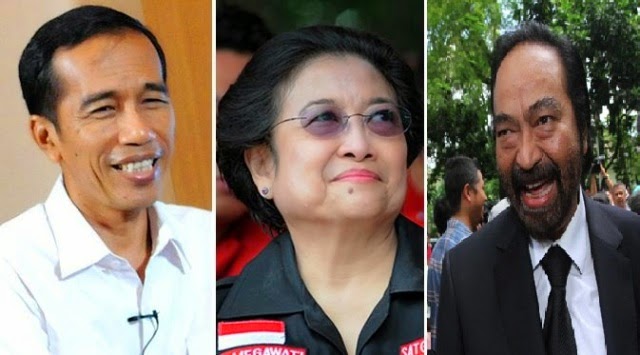
President Joko “Jokowi” Widodo deserves accolades galore. He is an entrepreneur-turned-public leader who is has responsive, hands-on, has an egalitarian demeanor and is result-oriented. He blazed a trail to set an unprecedented standard of modern leadership in Indonesia’s government. He put people’s interests first. He showed us that to govern is to serve.
A leader is not a boss behind a desk watching his subordinates work hard. A leader must glean data and information firsthand through impromptu visits. Then, he must make strategic decisions quickly, enable their implementation and control the work until the goals are accomplished. Jokowi has practiced what he preached during his stints serving as mayor of Surakarta and governor of Jakarta, which later catapulted him to the presidency.
During the barnstorming, he made many promises. He would develop a clean government and would be independent regardless of political coalitions. He would never buckle under the coalition party. The party would only join a coalition with no strings attached. And because of his impeccable track record, we believed Jokowi would be different. He gave us a glimmer of hope.
Prior to the appointment of his ministers, again, he stunned us by unprecedentedly seeking recommendations from the Corruption Eradication Commission (KPK) and Financial Transaction Reports and Analysis Centre (PPATK). This means Jokowi kept his promise of a clean government. Moreover, he scrapped fuel subsidies and burned foreign vessels caught fishing illegally. That proved Jokowi was decisive. So far so good.
However, his recent decision on a candidate for National Police chief really shocked us. Unbelievably, he proposed somebody who had been previously disqualified by the KPK and PPATK during the ministerial selection. Even after the candidate had definitively been named a graft suspect by the institution that has earned wide public respect and trust, the KPK, Jokowi still unequivocally defended his choice. We were taken aback. It was not the Jokowi we knew.
Worse, his political supporters ranging from TV stations, lawmakers to party chairpeople scrambled to convince us that Jokowi’s decision was right. They said that the candidate’s allegedly fat bank account had been cleared by an internal investigation as being legal wealth. And procedurally, the candidate was also recommended by the National Police commission. But their logic didn’t add up.
After believing in God, we, Indonesians, believe in the KPK. The institution would never name someone a suspect without solid proof. Nobody has ever been exonerated in a case handled by the KPK. Why does our beloved President Jokowi believe that this case will go against the grain?
He has nine candidates on his hands. Besides questionable integrity, the graft-suspect candidate achieved nothing of significance in the past, so why did Jokowi persistently promote him? Who gave him such lousy advice of abandoning the KPK and PPATK? Even if later, the KPK turns out to be wrong, why should he take the unnecessary risk of forfeiting his political capital of public trust? On this point, Jokowi has started to show his two-facedness on developing a clean government. We have also started to question his independence and think his law-enforcement commitment is too good to be true.
Jokowi’s decision on the National Police chief candidate ticked off his supporters, myself included. His volunteers, who believe he can bring Indonesia to prosperity, cried foul. But it seems he is unfazed, despite canceling, but not revoking, the candidacy.
* * * * *


